
Find Cook County Residents
Start with the fact that is most firm. A street address points first to CookViewer and the Assessor. A person’s name may fit the Clerk Recordings index, Circuit Court docket, professional license file, voter-match form, or historical directory. An old address needs a city directory, permit ledger, map, or newspaper before a modern parcel search will make sense. The Cook County residents directory is therefore a route through separate official indexes, not a single roster.
Public records identify owners, recorded parties, registered-voter matches, licensed professionals, litigants, and people named in historical sources. They do not list every person in a household. Match at least two independent facts, such as a municipality and date, a PIN and legal description, or a relative and record number.
- Map a known address in CookViewer and save the parcel identification number, or PIN.
- Read the Assessor card and property-information record for the parcel, values, exemptions, mailing field, and recent document clues.
- Search Clerk Recordings by PIN, name, address, document number, or legal description.
- Use the voter-match, court, vital, license, or historical index that fits the question.
- Ask the custodian, archive, or library when the online coverage ends.
The official Cook County overview explains the county seat, municipal structure, and unincorporated areas behind those custodian handoffs.
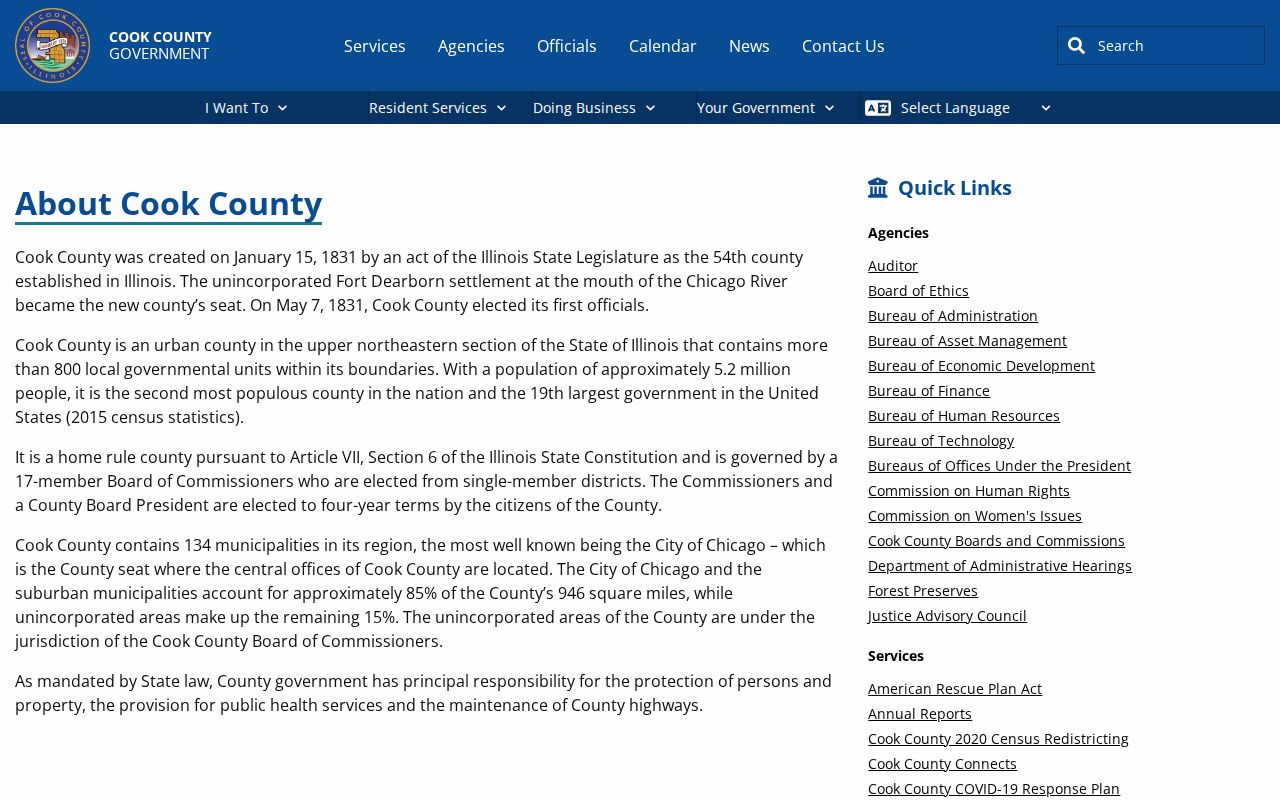
The overview helps explain why a Chicago record, suburban municipal file, and county parcel record may follow different paths.
Cook County Directory Offices
Three offices form the core property and registration trail. The Cook County Clerk now performs the recording duties once handled by the Recorder of Deeds, as well as election and vital-record work. The Assessor describes and values parcels. The Illinois State Board of Elections supplies a submitted-record match rather than an open voter list. For a full address-led method, use the Cook County street directory.
Cook County Clerk Recordings
118 N Clark St, Room 120
Chicago, IL 60602
312-603-5050
Cook County Clerk Elections
69 W Washington St
Chicago, IL 60602
312-603-0906
Cook County PIN Record Trail
The 14-digit PIN is the best bridge among Cook County property systems. CookViewer supplies the mapped parcel and nearby geometry. The Assessor card adds class, values, exemptions, characteristics, and a property-location field. The tax information portal adds billed-tax history, a mailing field, legal description, and recent recorded-document summaries. Clerk Recordings then ties the parcel to indexed deeds, mortgages, liens, plats, trusts, and other filings.
A PIN does not identify everyone at an address. The Assessor warns that Property Location is not a legal or postal mailing address, and a mailing field may belong to an owner or tax recipient elsewhere. Treat the legal description and the Clerk’s recorded document as the stronger ownership evidence.
- PIN
- The parcel identification number used across Cook property systems.
- Parcel
- A mapped unit of land, not a household roster.
- Index
- A searchable description that points to the held record or image.
- Criss-cross directory
- An address-first historical directory used to find names street by street.
The Cook County GIS agency page shows the public mapping context.
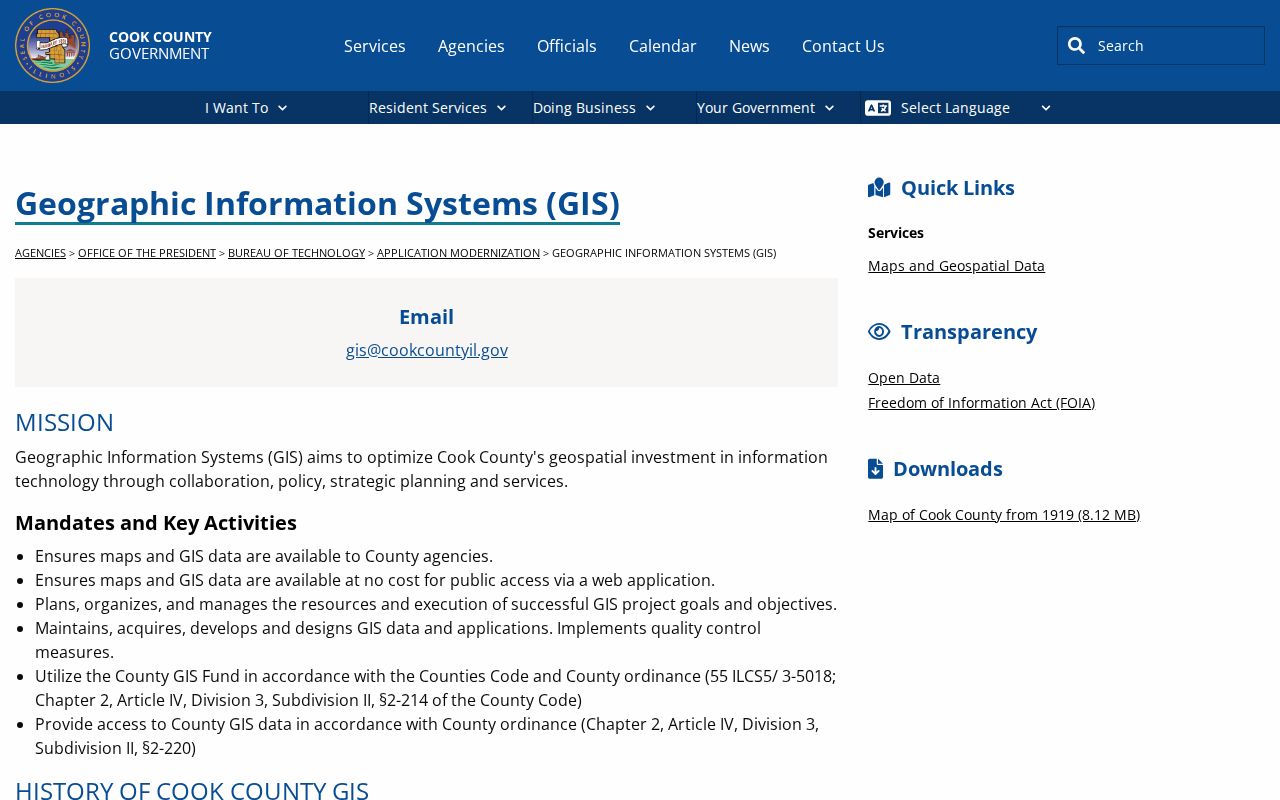
The GIS source is the visual handoff between a street address, its municipality, and the parcel records held by other offices.
Cook County Assessor Search Fields
The Cook County Assessor address search accepts either a PIN or an address. Address mode requires the house number and street name. Direction, unit, and city can narrow the match, and the instructions say to omit suffixes such as Avenue or Street. Advanced mode adds house-number and unit ranges, township, class, partial PIN, and appeal fields.
| Search field | Format | Use |
|---|---|---|
| PIN Number | 14 digits | Direct parcel match |
| House Number | Required text | Single address or advanced range |
| Direction | Select | Narrows similar street names |
| Unit Number | Optional text | Condo or multi-unit match |
| Street Name | Required, no suffix | Address-keyed parcel search |
| City | Optional text | Separates municipal matches |
The Assessor agency page provides the official office route and search access.
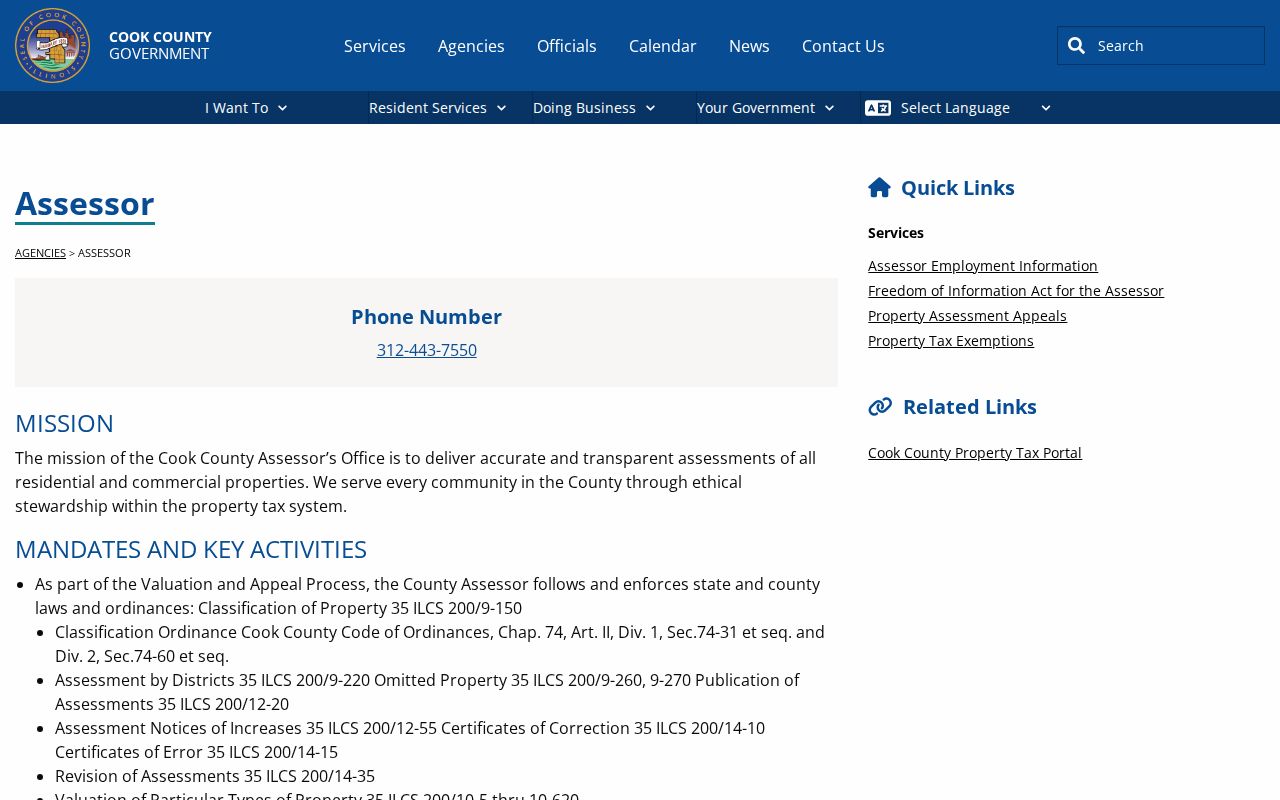
The screenshot anchors the directory search to the county custodian rather than an unaffiliated copy of property data.
Recorded Names in Cook County
The former Recorder of Deeds functions moved to the Cook County Clerk on December 7, 2020. Clerk Recordings documents online index coverage from 1985 forward. Full Search accepts combined name, street, house-number, PIN, or document-number details. Advanced Search separates grantor and grantee names, document types, recorded dates, trust numbers, subdivisions, and legal-description fields.
A grantor gives an interest; a grantee receives one. Neither label proves current residence. A result can show document number and type, dates recorded and executed, first parties, consideration, PIN, legal description, address, page count, and image or order controls. The portal warns that its address is informational, so resolve a mismatch with the PIN, legal description, and held file.
The Cook County Clerk agency page explains the Clerk’s broad records role.
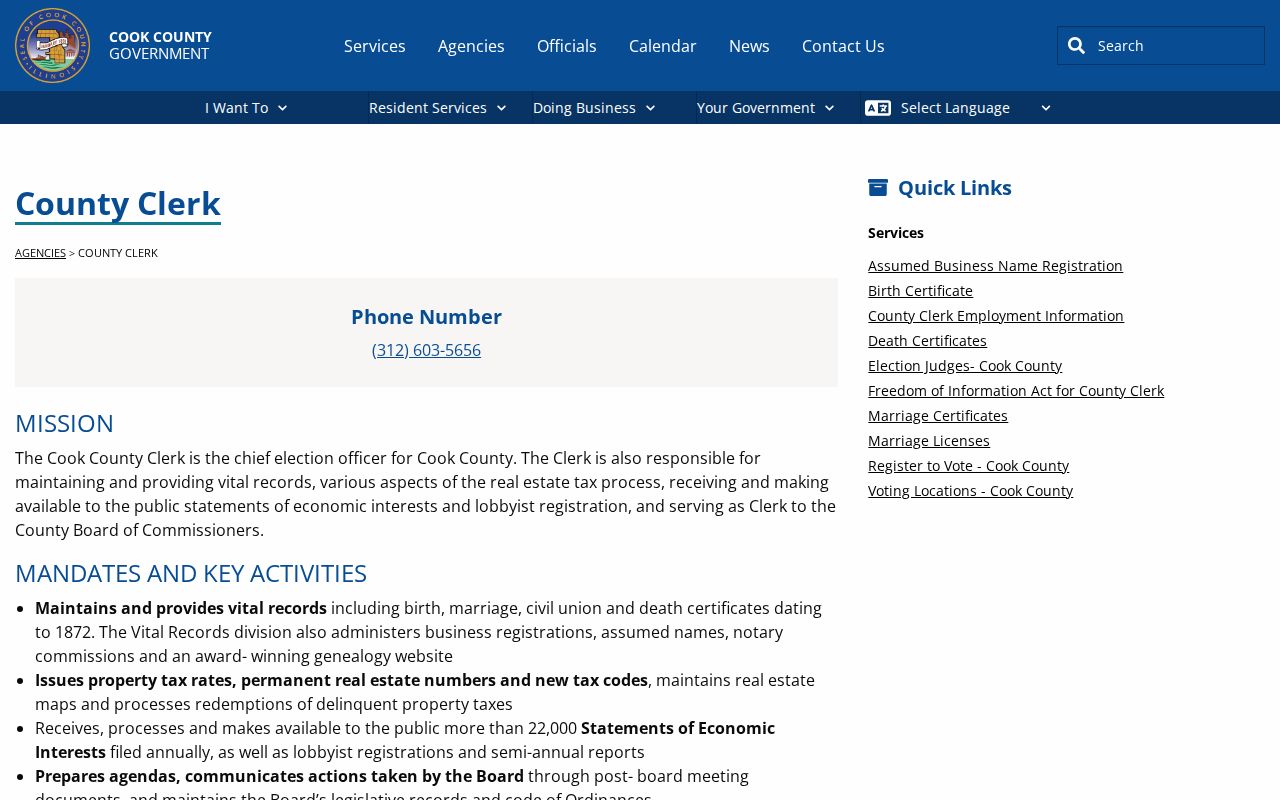
The Clerk is the proper place to confirm recordings, vital records, election administration, and related county filings.
Note: Older ownership work moves from the online index to tract books, deed books, office help, and archival sources.
Current Cook County Directories
Current public sources cover narrow groups and acts. Property tools describe parcels and taxpayer-related fields. The recording index names parties to filed instruments. A voter tool verifies a submitted registration match. Court, license, business, and municipal staff searches each serve their own official purpose. Together they form a useful Cook County residents directory when the result is read within those limits.
| Source | Who It Lists | Keeper | Access |
|---|---|---|---|
| Assessor and property portal | Parcels and mailing fields | Assessor and county offices | Free search |
| Registration Lookup | Submitted voter match | Illinois State Board of Elections | Personal match form |
| Clerk Recordings | Parties to filed instruments | Cook County Clerk | Free index, images and copies separate |
| ODYSSEY | Parties in public case summaries | Circuit Court Clerk | Free public docket status |
| Chicago staff directory | Public city staff contacts | City of Chicago | Free online |
Choose a source by the fact it can confirm. A deed index can support a transfer, while the voter form confirms a submitted match. A court result is only a docket summary. The Cook County resident lookup method shows how to cross-check one person without turning a partial match into a claim.
Cook County Voter Match
The Illinois Registration Lookup asks for first name, last name, date of birth, ZIP, street number, and a street selection. It is a verification form. It does not publish a downloadable street roster. Suburban Cook voters can also use the Clerk’s voter-information page for election details.
Illinois election law limits bulk voter data and withholds sensitive identifiers and protected residences. A failed match can stem from an old address, a spelling difference, jurisdiction, inactive status, or a protected record. It should not be treated as proof that someone is not registered or does not live in Cook County.
The Cook County voter information page is the county election route.
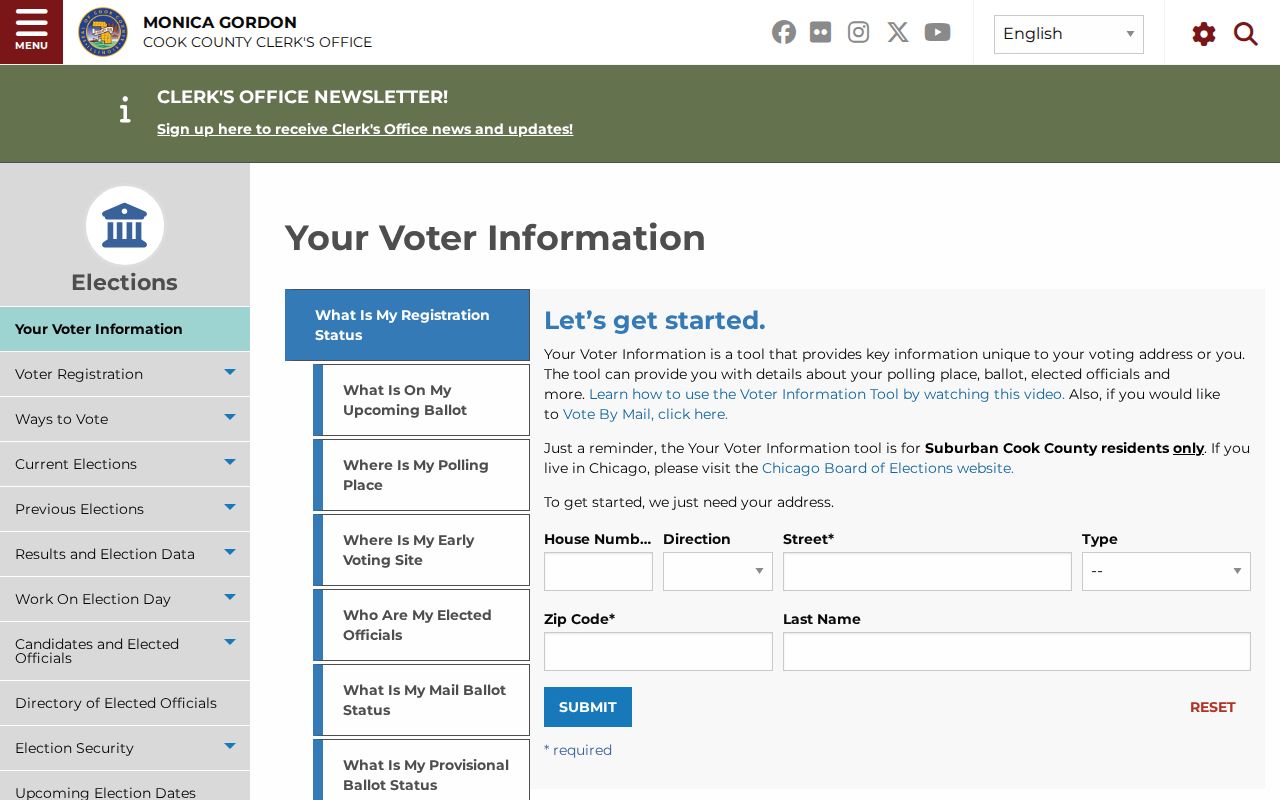
This county page complements the state match form and helps distinguish election service from a general people list.
Cook County Court Status
The Circuit Court Clerk’s ODYSSEY search supports a smart search and advanced fields for case number, party name, business name, attorney, date of birth, and filing range. Results can show case number, style, type, status, filing date, location, party details, events, and hearings. The public portal limits a broad result set and states that its brief docket is not the official court file.
Use a courthouse terminal, the Clerk’s Online Records Center, or an archive request when a case is missing, old, sealed, restricted, or needs an official copy. Federal matters use PACER, while re:SearchIL is a separate access-controlled state system.
The Circuit Court online case information page states the scope and limits.
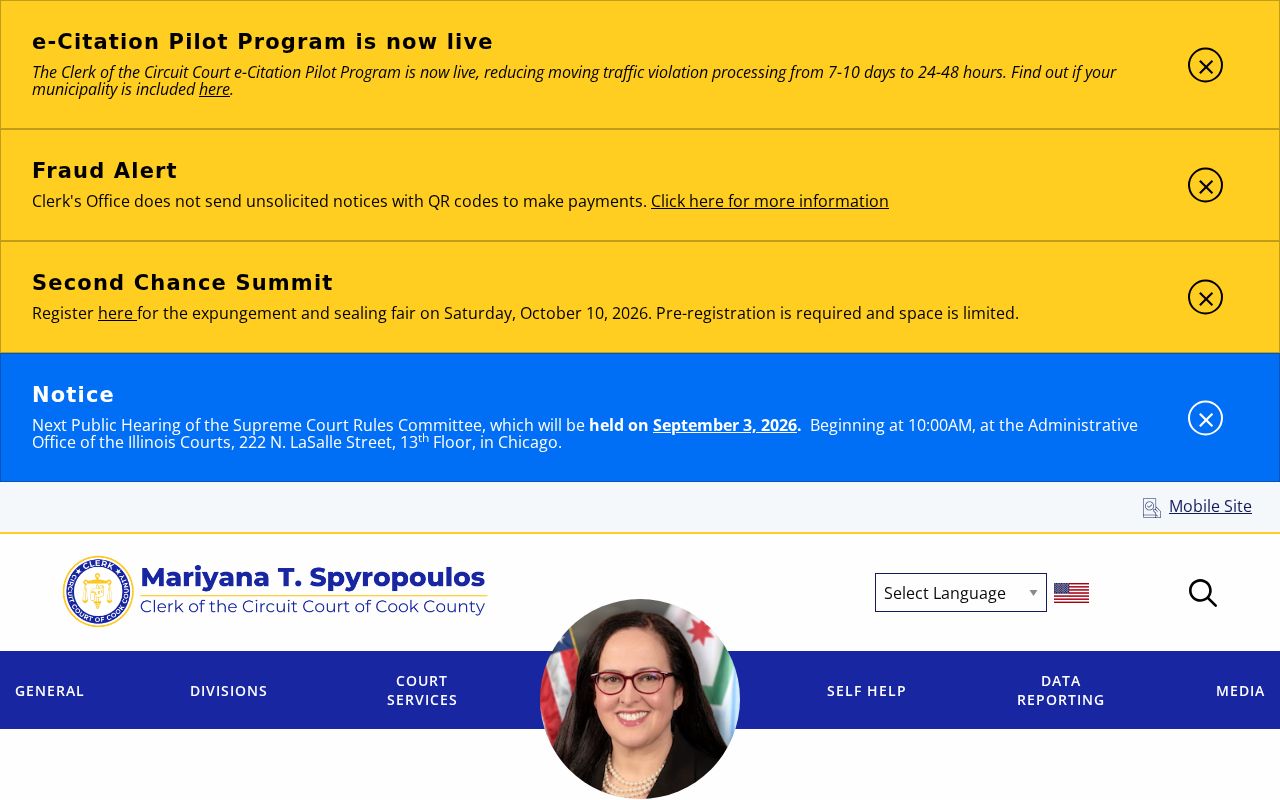
The image points readers to the official court route and reinforces that docket status and a certified file are different products.
Cook County Licenses and Firms
Illinois keeps several public affiliation records. The Secretary of State corporation and LLC search accepts a business name, registered agent, president, secretary, manager, or file number. IDFPR’s license lookup is updated daily and returns credential type, number, status, dates, discipline, city, state, and ZIP without publishing a home address. ISBE ELIS searches educator credentials by educator, city, district, or school.
These tools confirm a filing or credential, not residence. Pair a name with the listed city, entity, profession, or file number. I-CASH can add a name, city, ZIP, or property-ID lead for unclaimed property, but its claim workflow should not be confused with an address directory.
The Illinois professional license lookup provides the official credential search.
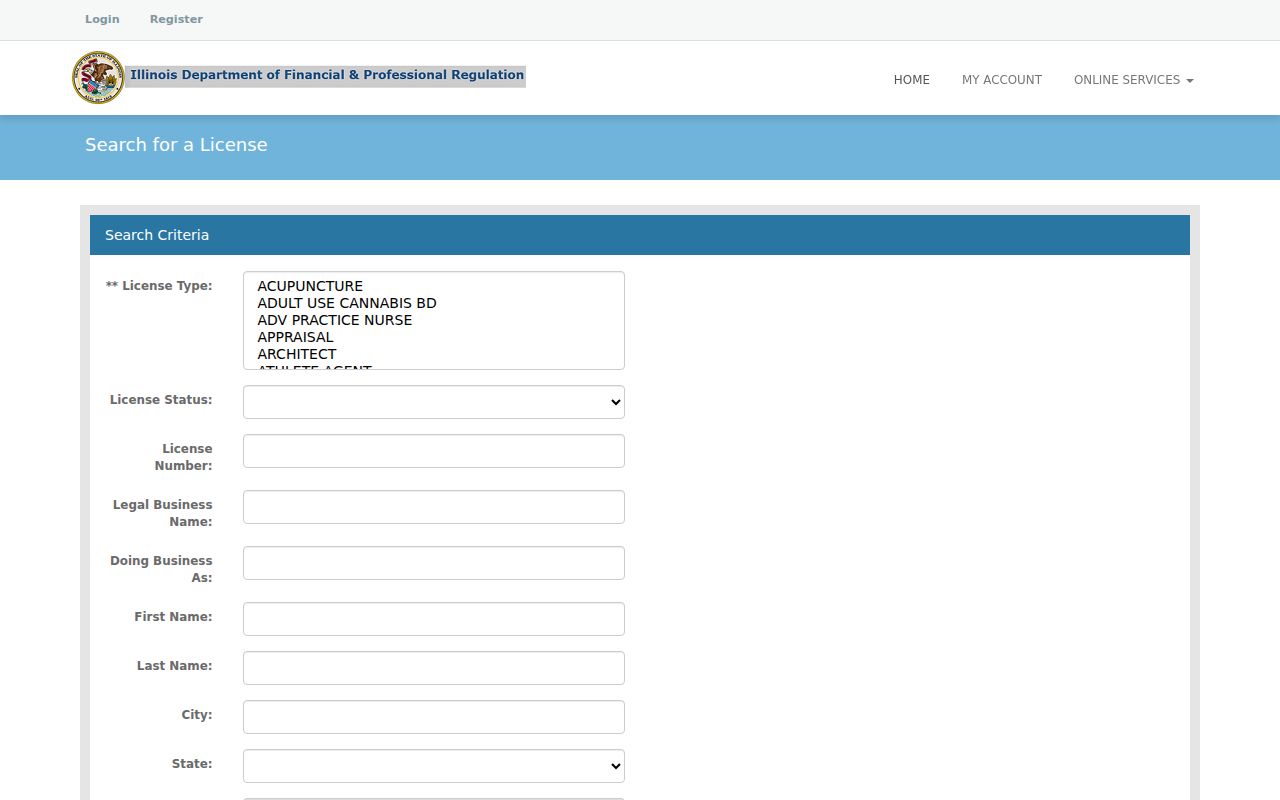
The public credential fields are useful corroboration when the same name appears in several Cook County sources.
Cook County Vital Indexes
The Cook County Clerk issues local birth, marriage, civil-union, and death records. Its genealogy route covers births at least 75 years old, marriages at least 50 years old, and deaths at least 20 years old. Those genealogy copies are non-certified and marked for genealogy use. Current certified-copy eligibility depends on the record and relationship, so the current Clerk form controls the request.
Illinois Department of Public Health is the qualifying statewide copy route. State Archives and IRAD add older indexes, while FamilySearch collections help locate Cook marriage, death, and birth-register entries. The 1871 Great Fire destroyed many early Chicago marriage licenses. The Sam Fink newspaper index and other contemporary notices can bridge the gap, but an index lead is not a replacement certificate.
Historical Cook County Directories
Chicago History Museum describes a city-directory run beginning in 1839. Newberry Library holds exact printed and microfilm runs, including a digitized Ellis & Fergus directory from 1844 and Haines criss-cross volumes for later address-first work. Chicago Public Library adds municipal documents, telephone directories, newspapers, yearbooks, and local archive collections. The detailed shelf guide belongs in the Cook County city directory.
A directory entry may give a name, trade, work address, spouse, boarding or residence notation, and home address. Abbreviations and old street numbers must be preserved. Chicago renumbered most streets in 1909 and the Loop in 1911, so the Lakeside conversion list and directory street guide often supply the link to a modern parcel.
Cook County Records Beyond Web
Online limits are routing facts. Pre-1985 deed work may require tract books, deed books, office terminals, or archives. Circuit Court Archives publishes division coverage back to 1871 and may need time to retrieve off-site files. Cook County Archives currently offers remote reference while closed to public visits. The Chicago History Museum, Newberry, Chicago Public Library, Illinois State Archives, and IRAD preserve the directory, map, newspaper, permit, naturalization, and local-government layers.
When a public record is not posted, a written request under the Illinois Freedom of Information Act, 5 ILCS 140/3, generally receives a response within five business days, subject to a permitted extension and exemptions. A standard form or stated purpose is usually not required. The Illinois Attorney General Public Access Counselor handles access disputes.
The Public Access Counselor page explains the state review route.

This fallback matters when the right custodian has a public record but no searchable online index.
Safer Cook County Searches
Official records and commercial search tools serve different roles. An official index identifies its custodian, fields, scope, and correction path. A commercial result may merge sources without showing whether a name came from a deed, phone list, or stale address. Verify any claimed Cook County connection with the office that created the record.
| Point | Official Cook County or Illinois record | Commercial search category |
|---|---|---|
| Source | Named custodian and record type | May combine many files |
| Meaning | Defined fields and date | May infer links |
| Correction | Custodian process | Provider process varies |
| Best use | Confirm a specific public fact | Lead that still needs proof |
Lawful use. Use public records for legitimate personal research and civic inquiry. Never use an address or protected detail to stalk, harass, threaten, or harm anyone.
Cook County Search Changes
Current tools have changed recently. CookViewer 3.1 arrived on June 30, 2025 with an updated map engine, clearer parcel symbols, measurement and PDF reports, better mobile and Spanish support, and fixes to multiple-parcel selection. The Circuit Court Clerk added an Online Records Center in the early 2025 reporting period for requests involving files, archives, data, and media.
The Clerk also reported improvements to vital-record queues and mail tracking, election systems, and property-fraud prevention. Its official pages warn against unsolicited QR-code payment notices. A free Property Fraud Alert can notify an enrollee when a document is recorded against a registered name or property, though it does not block a filing.
Protected results also have lawful explanations. Illinois’ Address Confidentiality Program supplies eligible survivors a substitute address and mail forwarding, but it cannot erase an old public property record. The Public Official Safety and Privacy Act took effect January 1, 2026 for a defined group of public officials. Neither program creates a universal deletion right.