
Cook County Directory Runs
Cook County directory research is strongest in Chicago, where three major institutions preserve overlapping print, microfilm, and digital holdings. Coverage descriptions are not identical. Ask for a specific year and format, and confirm whether an item must be requested before a visit.
| Collection | Years | Where held | Access |
|---|---|---|---|
| Chicago city and telephone directories | 1839 to present, described as complete | Chicago History Museum Research Center | Print and microfilm; research appointment |
| CPL historical run | 1844-1872 plus a long directory and telephone-book run | Chicago Public Library | Municipal Reference, Special Collections, and third-floor microfilm |
| Newberry directory microfilm | 1839; 1844; 1849-50; 1851; 1853-57; 1859-68; 1870-1917; 1923; 1928/29 | Newberry Library | Research room; some online material |
| Haines and Newberry criss-cross | Newberry 1953 and 1955; CPL Haines run varies | Newberry and CPL | Ask staff for exact year and format |
| Ellis & Fergus scan | 1844 | Newberry digital collection | Free page images online |
A complete Cook County-wide suburban run was not found. For an address outside Chicago, identify the municipality first, then contact its public library or historical society. A suburban telephone book or community directory may cover several towns under a regional title.
Cook County City Directory Shelves
The Chicago History Museum combines city and telephone books with permits, maps, newspapers, yearbooks, photographs, blue books, and clipping files. Some Research Center items need 48 hours of advance notice. Copying can be restricted for directories, newspapers, maps, scrapbooks, color photographs, and pre-1900 originals.
The museum's house-history page shows how its directory material fits with permits and maps.
The collection route is most useful when a directory name must be tied to a building rather than read alone.
The Chicago Public Library Municipal Reference Collection holds city and county documents, ordinances, maps, and election material alongside directory resources elsewhere in the library. Newberry gives the clearest published list of exact microfilm years. Staff at each site can determine whether a volume is print, film, licensed digital content, or an archival request.
Early Cook County City Directories
Chicago History Museum describes a directory run beginning in 1839. Newberry lists scattered early volumes before its nearly continuous 1870-1917 sequence. This is a local records story as much as a shelf list: the city grew quickly, publishers changed, street labels shifted, and each edition chose whom and what to include.
| 1839 | Earliest year in the CHM and Newberry descriptions |
|---|---|
| 1844 | Ellis & Fergus directory, now available as a Newberry page-image scan |
| 1870-1917 | Newberry's long near-continuous microfilm run |
| 1928/29 | Polk material identified through Newberry's guide |
| 1953 and 1955 | Newberry criss-cross years that reverse the usual name-first search |
The publication year matters. A directory was compiled before it appeared, and its entry should not be stretched into proof for every month of that year.
Cook County's 1844 Directory
The Newberry digitized 1844 directory identifies Ellis & Fergus as publisher and preserves the actual page image. It is better evidence than a detached transcription because the scan keeps page order, abbreviations, nearby entries, and the volume's own street language.
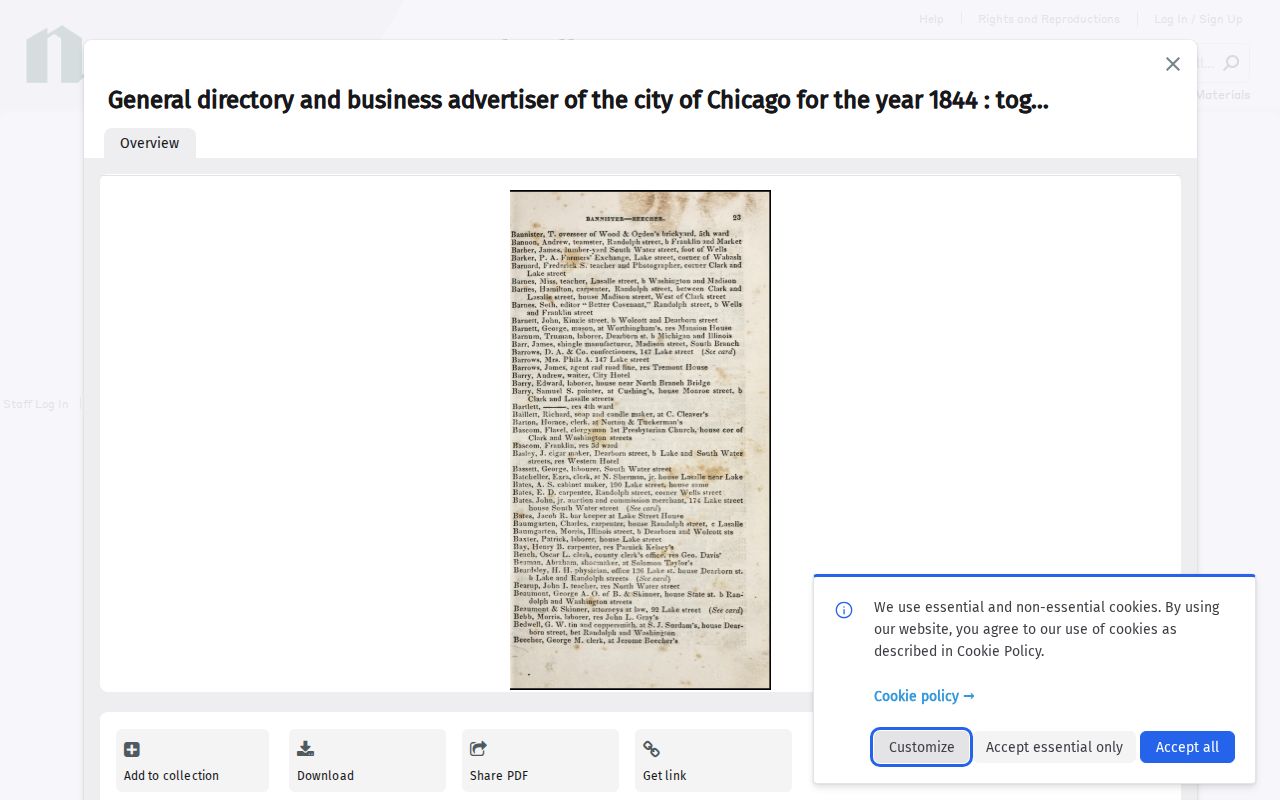
The image lets a researcher cite the publisher, year, page, and exact spelling while keeping the historical wording intact.
An 1844 entry may describe a location by street and cross streets rather than a modern house number. One published example places a milkman on Market Street between Randolph and Washington. Translate that wording with the volume's guide and a period map. Do not force it into a current geocoder before checking later street changes.
Read Cook County Directory Entries
A Cook County city directory entry must be read with its preface and abbreviation key. The 1890 Lakeside environment contains a general and business directory, street guide, public agencies, societies, churches, and cemeteries. Person entries can combine a name, trade, office or business clue, residence, boarding notation, spouse, or widow notation. The precise mix changes by edition.
| Indexed name | Record spelling, initials, and name order exactly |
|---|---|
| Occupation | A trade or business context, not a unique identity by itself |
| Residence | A listed home address or older block description for that edition |
| Boarding notation | A mark that distinguishes boarding from a residence label |
| Spouse or widow | A relationship clue that can separate people with the same name |
| Street guide | The volume's own explanation of street order and location |
- Criss-cross directory
- An address-first volume, useful when the street number is known but the name is not.
- Householder index
- An index organized around listed household heads or addresses, depending on the edition.
- Abbreviation key
- The publisher's definitions for short forms used in that specific book.
Photograph or note the title page and abbreviation key before transcribing an entry. A short mark can separate a residence from an office or boarding place.
Reverse Cook County City Directories
Conventional city directories answer a name-first question. Criss-cross volumes reverse it by listing streets and house numbers, which makes them valuable for a known Chicago address. CPL identifies Haines Chicago City Criss-cross Directory holdings, and Newberry documents 1953 and 1955 criss-cross material.
Use the exact year that brackets the event under study. Scan adjacent numbers because a multiunit building, vacant lot, changed entrance, or publication lag may affect the list. The historical entry is not a current resident claim. For modern parcel and deed work, shift to the Cook County street directory process.
Newberry's Chicago genealogy guide lists its directory and criss-cross runs.
The guide is the practical catalog for choosing a year before visiting the research room.
Cook County Directory Number Changes
Chicago's 1909 address conversion, followed by the Loop change in 1911, is the key Cook County directory quirk. A person can stay in the same building while the printed number changes. The Lakeside conversion list maps old numbers to new ones. Corner descriptions, street guides, Sanborn maps, and adjacent-year directories can also bridge the change.
Annexation creates another break. A pre-annexation address may be filed under an older local name or held by a neighborhood historical society. Preserve the spelling and jurisdiction printed in the source. Search the old and new number only after recording which conversion tool supports the match.
Extend Cook County Directory Evidence
Directories identify listed people and addresses, while permits and Sanborn maps explain the building around them. Chicago permit ledgers cover 1872-1911 by chronological city sections. More complete indexed books from 1912-1955 add architect and inspector notes. Post-June 1954 permit work moves to Chicago's building department and records-request route.
The Chicago Public Library Sanborn index covers 1894-1897 and 1905-1951, while Newberry lists Chicago Sanborn material from 1900-1950. These maps can show footprints, construction materials, uses, lots, and street context. They are not lists of residents.
The Chicago History Museum collection page describes its directory and companion holdings.
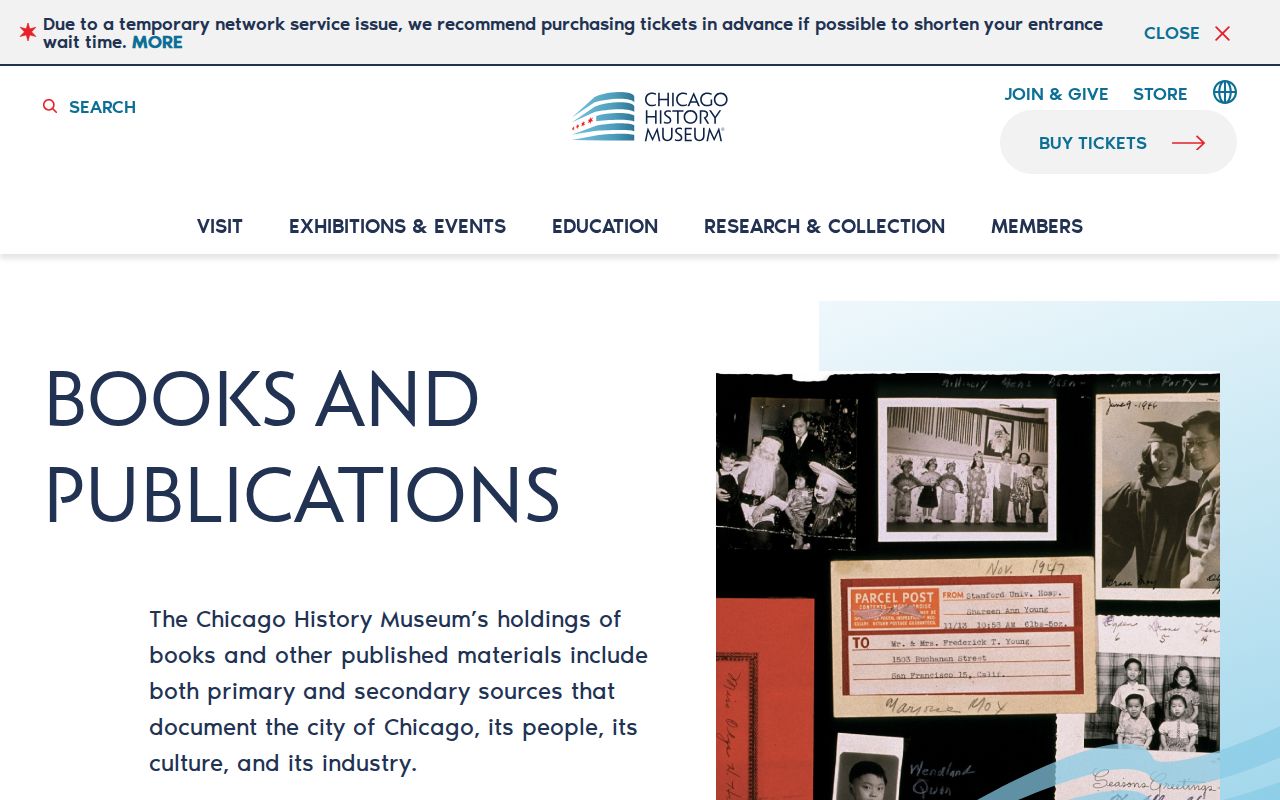
That broader shelf can test whether an address change reflects a move, a renumbering, or a change to the structure.
Trace Cook County Family History
Follow a household in short, documented moves. Do not leap from one familiar name to another decades later. Cook County contains many people with the same surname, shifting municipal boundaries, and varied spellings.
- Find the earliest reliable entry and cite its year, publisher, page, spelling, and address.
- Check the years immediately before and after it. Note initials, spouse or widow marks, trade, and each address change.
- Use an address-first directory for the same year when available, then compare nearby listings.
- Pair the trail with the public 1900 through 1960 federal census schedules as appropriate, allowing for the 72-year release rule and changed ward lines.
- Close a gap with an official marriage or death index, probate file, deed, obituary lead, cemetery record, or naturalization record.
A disappearance can mean death, a move, an omitted listing, a changed surname, or a publisher's rule. Newspapers are useful leads, but an official record should confirm a vital event when the conclusion matters. The 1871 Great Fire destroyed many pre-fire Chicago marriage licenses, so the Fink index and newspaper notices may bridge a loss without replacing the missing original.
Cook County Directory Fallbacks
The CPL Municipal Reference Collection supplies city and county documents, maps, ordinances, and election material that can explain a directory entry. The Chicago City-Wide Collection spans 1807-2021, with residence, land, cemetery, biographical, street-scene, and municipal series. Newberry adds newspapers, genealogy tools, exact directory runs, and maps.
Chicago Public Library's Municipal Reference page shows the local government collection.
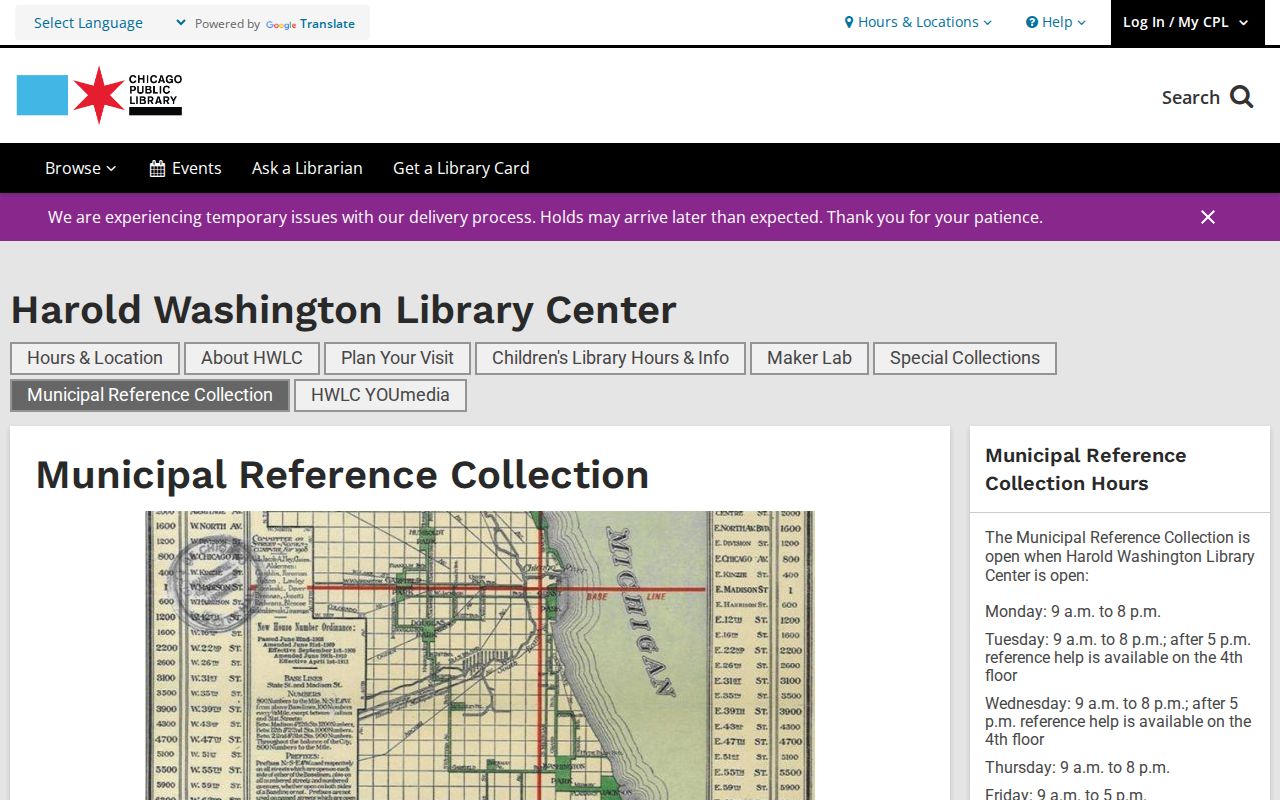
The municipal collection helps place a listed person within the city boundaries and public institutions of that directory year.
Illinois State Archives and IRAD provide historical death, marriage, military, and local-government indexes. Cook County Court Archives holds naturalization petitions and declarations from 1871-1929. Church, parish, cemetery, school, yearbook, and community collections may remain with the institution. If no online catalog answers the question, contact the library or archive with the person's name, exact directory year, printed address, and a clear request for the next source.