
Cook County Lookup Record Map
A sound resident lookup asks one clear question at a time. Property systems tie a PIN to a parcel, while recorded documents index named parties to deeds, mortgages, liens, trusts, and releases. The state voter form verifies a submitted identity and address combination. Court dockets show public case events. Older vital indexes establish dated family facts. License and business files confirm a public credential or entity role. These are separate records with separate keepers, and none is a master roll of everyone in a home.
| Public record | Point it can confirm | Official source | Access boundary |
|---|---|---|---|
| Parcel and recordings | Property location, PIN, and a named recorded party | Assessor card and Cook County Clerk CRS | Free indexes; copies may cost; not an occupant list |
| Voter match | Whether supplied identity and address fields match | Illinois State Board of Elections | Public verification form; bulk and sensitive data restricted |
| Court docket | Party, case number, date, type, status, hearings | Circuit Court ODYSSEY and Archives | Web summary; official file and copies through Clerk |
| Vital index | Historical birth, marriage, death, or relationship lead | Cook Clerk, IDPH, State Archives | Thresholds, identity rules, and copy fees apply |
| Credential or entity | License status or filed business role | IDFPR, ISBE, Illinois Secretary of State | Public filed fields, not proof of residence |
| Unclaimed property | Name, city, ZIP, or old address-of-record lead | Illinois Treasurer I-CASH | Free search; a claim requires proof |
Choose the source that fits what is already known. A property question should begin with the address or PIN, not a broad name search. A credential question belongs in the relevant state register. A family-history question may require the genealogy portal, an archive index, an obituary, and then a copy request. Dates matter throughout Cook County because a current card, an old directory entry, and a court event can all refer to different periods.
Confirming Cook County Voter Matches
The Illinois registration lookup is a match tool, not a browsable list of Cook County residents. It asks for first and last name, date of birth, five-digit ZIP, street number, and a street selected from the form. That combination helps separate people who share a name. The result confirms registration information available through the official form; it does not open the statewide voter database for download.
Illinois election law limits sensitive fields and protected residence data. The suburban Cook County Clerk voter-information page supplies the local election route, while the state form performs the individual match. If the ZIP or street fails, check the complete postal address before drawing a conclusion. A former address, recent move, misspelling, protected record, or different election authority may explain the miss.
The official voter form can be reviewed before entering the required fields:
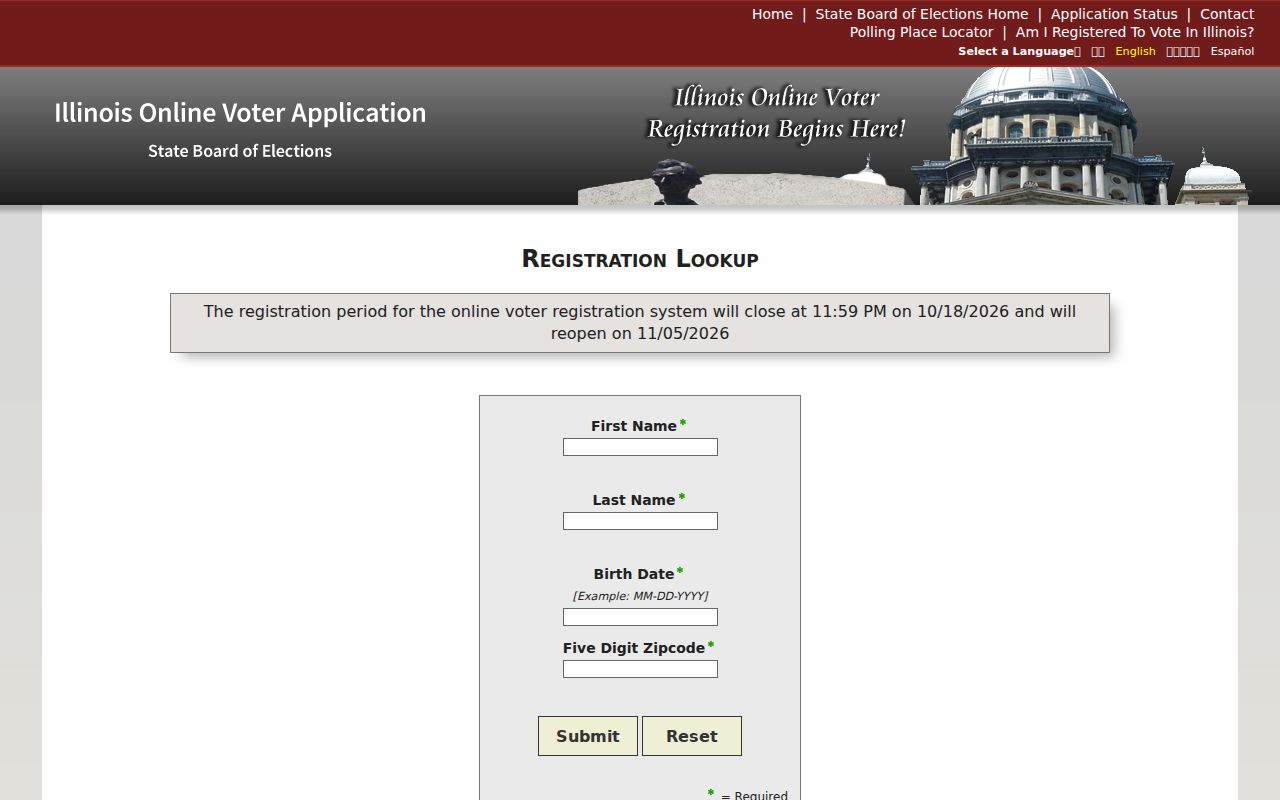
The screen shows why a ZIP alone cannot identify a resident: the form requires several independent identity and address fields.
Note: A failed voter match is not proof that a person has left Cook County or is not registered elsewhere.
Reading Cook County Court Results
The Circuit Court of Cook County Online Case Information page warns that its electronic entries are brief status summaries, not the official court record. ODYSSEY Smart Search accepts a party or case number. The official user guide gives the name format as last name, comma, first name and allows a wildcard. Advanced options include party name, business name, birth-date range, case type, case status, filing-date range, location, and judicial officer.
Results are capped at 200. Default columns include case number, defendant or case style, file date, type, and status. A detail screen adds a case summary plus hearings and events in reverse time order. Very recent entries can lag, and juvenile, sealed, expunged, adoption, or other confidential records may be missing. The public portal should therefore support a carefully framed resident lookup, never an inference from silence.
A typical public result inventory includes:
- case number and party or case style;
- file date, case type, and current status;
- hearing dates and event chronology;
- selected public identifiers where allowed;
- links or controls available for that case.
For historical material, the Court Archives holds division-specific runs reaching back to 1871. Its mail search form is the fallback when an online result is absent or too brief. Public terminals may also show newer or fuller docket data. The Clerk file, not the web screen, is the source for a certified copy.
Verifying Cook County Resident Records
Use two or three independent keys before deciding that records belong to the same person. A full name plus municipality is stronger than a surname. Add a middle initial, birth year, street, PIN, relative, document number, entity, or event date when that field is public. Do not join a court party to a parcel merely because both appear in Cook County. A trust can hold title, a relative can receive tax mail, and a voter entry can be stale or protected.
- Write down the exact name, known place, and useful date range. Keep maiden names, initials, alternate spellings, and business names as separate searches.
- Use the least sensitive official record that answers the question. For an address match, use the voter form only with its required fields or connect a parcel PIN to Clerk recordings.
- Run a second record with a different purpose. Compare dates and identifiers rather than assuming every same-name result describes one Cook County resident.
- Open or request the underlying file when proof matters. Ask the custodian for the correct certified or non-certified copy and preserve its citation.
Cook County terms can be easy to mix up:
- Docket
- A dated list of filings, hearings, and events in a court case. It is not the full case file.
- Index versus image
- An index points to a record with names and citation fields; an image reproduces the underlying filed page.
- Certified copy
- A copy authenticated by the office that keeps the official record, often with eligibility and fee rules.
- PIN
- The parcel identification number that connects Cook County property systems. It identifies land, not each person at that location.
Cook County Vital Record Checks
The Cook County genealogy portal handles older birth, marriage, and death searches through an account. Its published age thresholds are 75 years for births, 50 for marriages, and 20 for deaths. Genealogy copies are non-certified and marked for genealogy use. Current certified copies have separate relationship, identity, and fee rules through the Cook County Clerk Bureau of Vital Records or the Illinois Department of Public Health.
When the web account does not resolve the question, the Clerk's genealogy request form accepts mail and in-person requests. State Archives and IRAD add statewide death and marriage indexes, while library and FamilySearch collections give extra spelling and date leads. Each should be labeled as an index or historical image. A result is not a current identity document.
The Cook genealogy information screen shows the official search and request route:
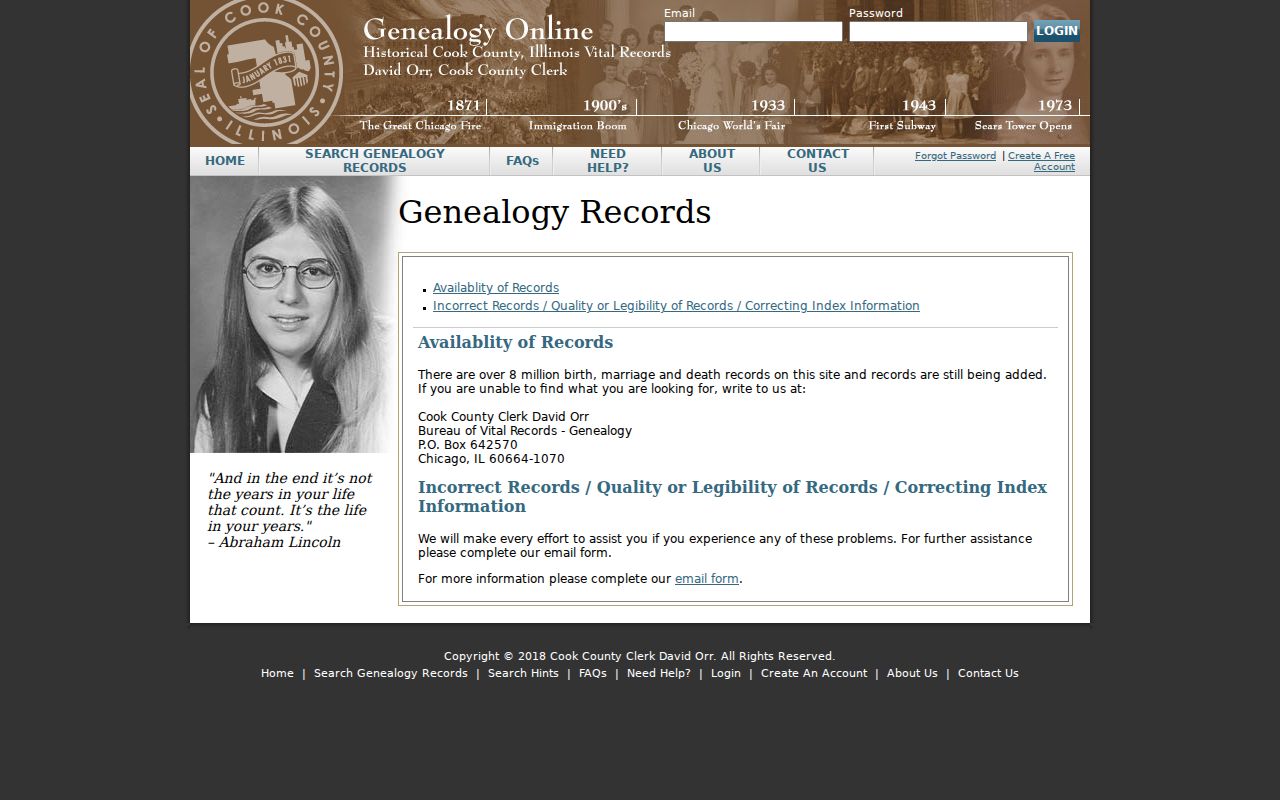
That route is especially useful when a known event can distinguish two Cook County residents with similar names.
Note: Index spelling can be wrong, so test maiden names, initials, nicknames, and nearby years before requesting a copy.
Cook County Adoption Connection Routes
An ordinary resident lookup is not the right route to a sealed adoption record. Illinois provides formal channels for an eligible adult adoptee or surrendered person, adoptive parent of a minor, certain surviving relatives, or a legal guardian. The Illinois Adoption Registry and Medical Information Exchange, known as IARMIE, records preferences and supports permitted identity, contact, and medical-information exchange. Former Illinois Department of Children and Family Services cases may use the Midwest Adoption Center confidential-intermediary route.
This is a human connection path with consent and statutory limits. It should not be replaced by guesses from names, obituaries, parcels, or social profiles. Original birth records remain sealed except through the release rules that apply to the eligible person and case. The current IARMIE page explains the application, identification, fee, and waiver details.
The official state registry route is shown here:
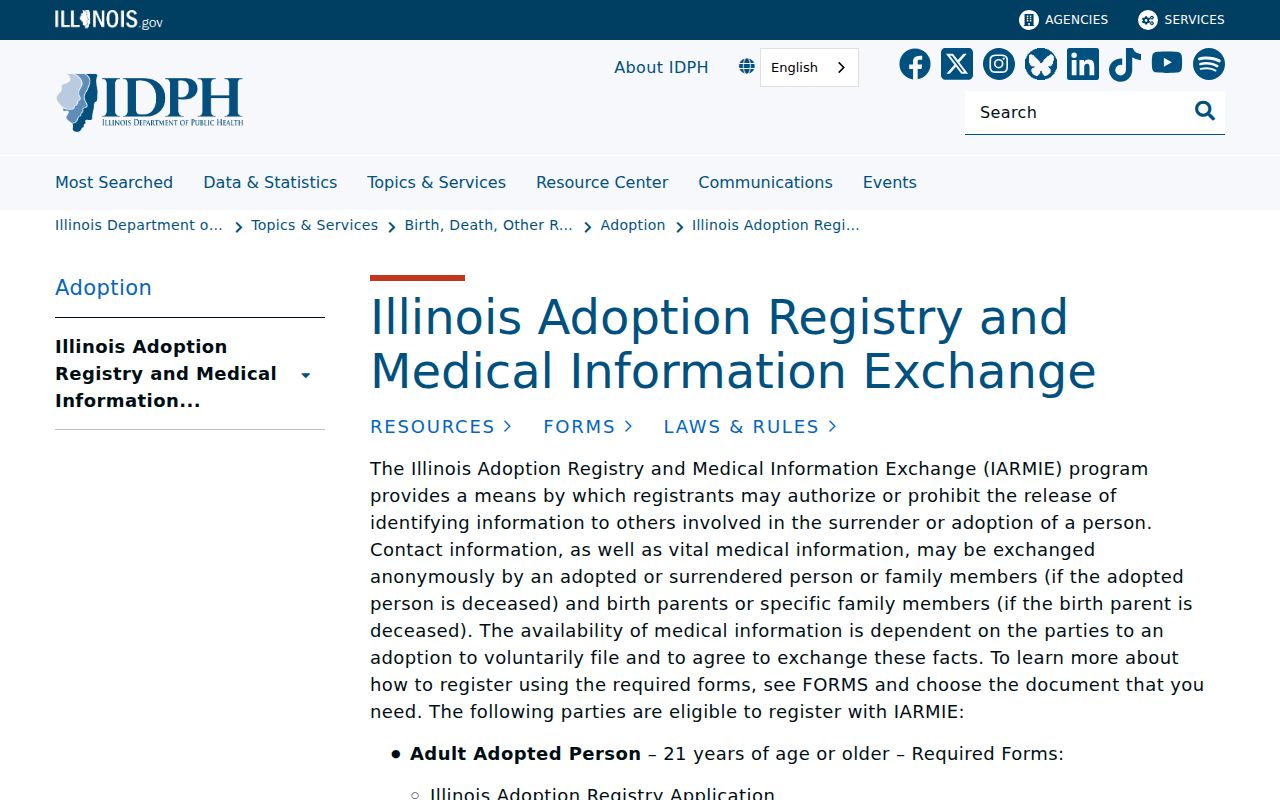
The state program protects privacy while giving eligible relatives a defined way to seek information or contact.
Confirming Cook County Public Affiliations
A public role can be checked without claiming a home address. The IDFPR License Lookup is updated daily and searches by name or license number. Public results can show credential name, city, state, ZIP, license number, type, status, effective dates, expiration, discipline, and other licenses. It omits home address, phone, and email. The ISBE ELIS public search uses city, district, school, or educator name.
Illinois Secretary of State entity files can be searched by business name, registered agent, officer, manager, or file number. Those fields show a filed connection on a date, not where a person now lives. The same caution applies to Cook assumed-name records. For a free heir or former-address lead, the Treasurer's I-CASH search accepts last or business name and can be narrowed by first name, city, ZIP, or property ID.
The state credential and unclaimed-property screens show two distinct forms of public affiliation:
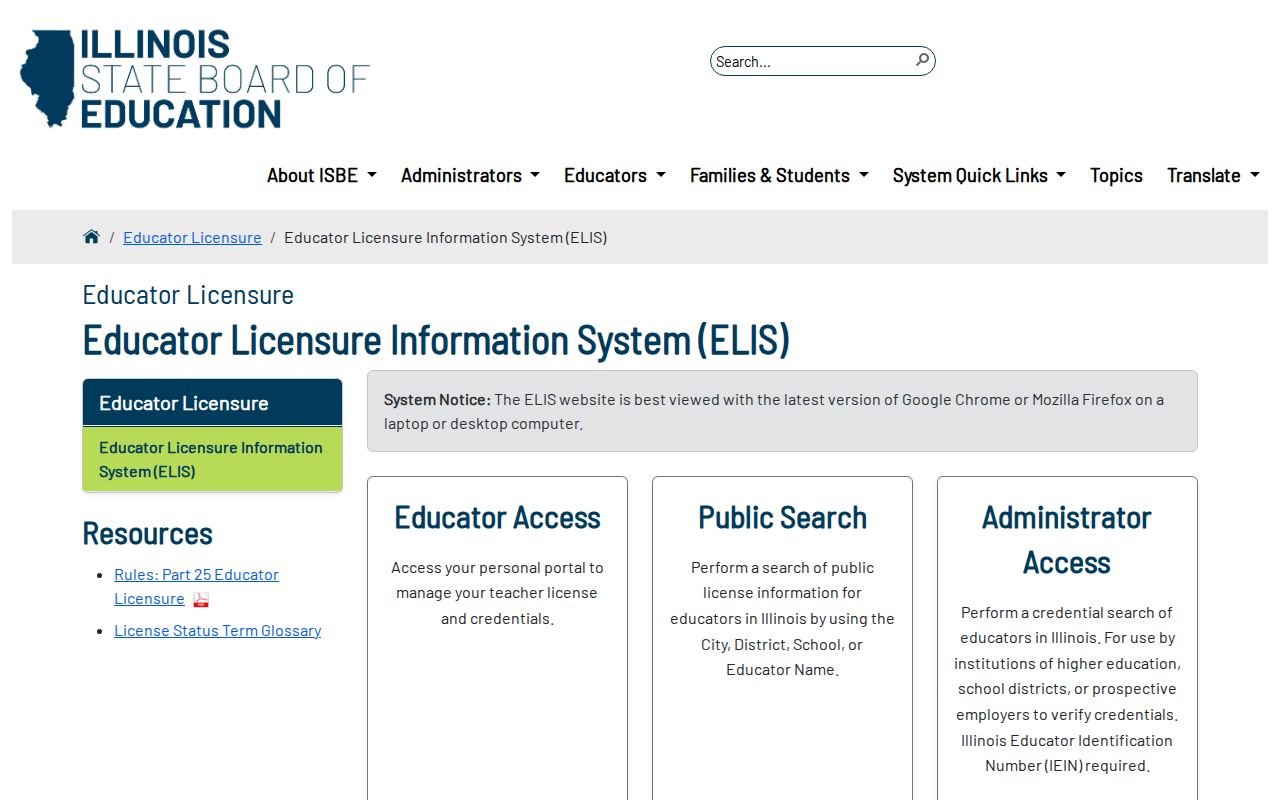
The educator search establishes a public credential, while it avoids private contact fields.
The free state-held property search offers a separate dated lead:
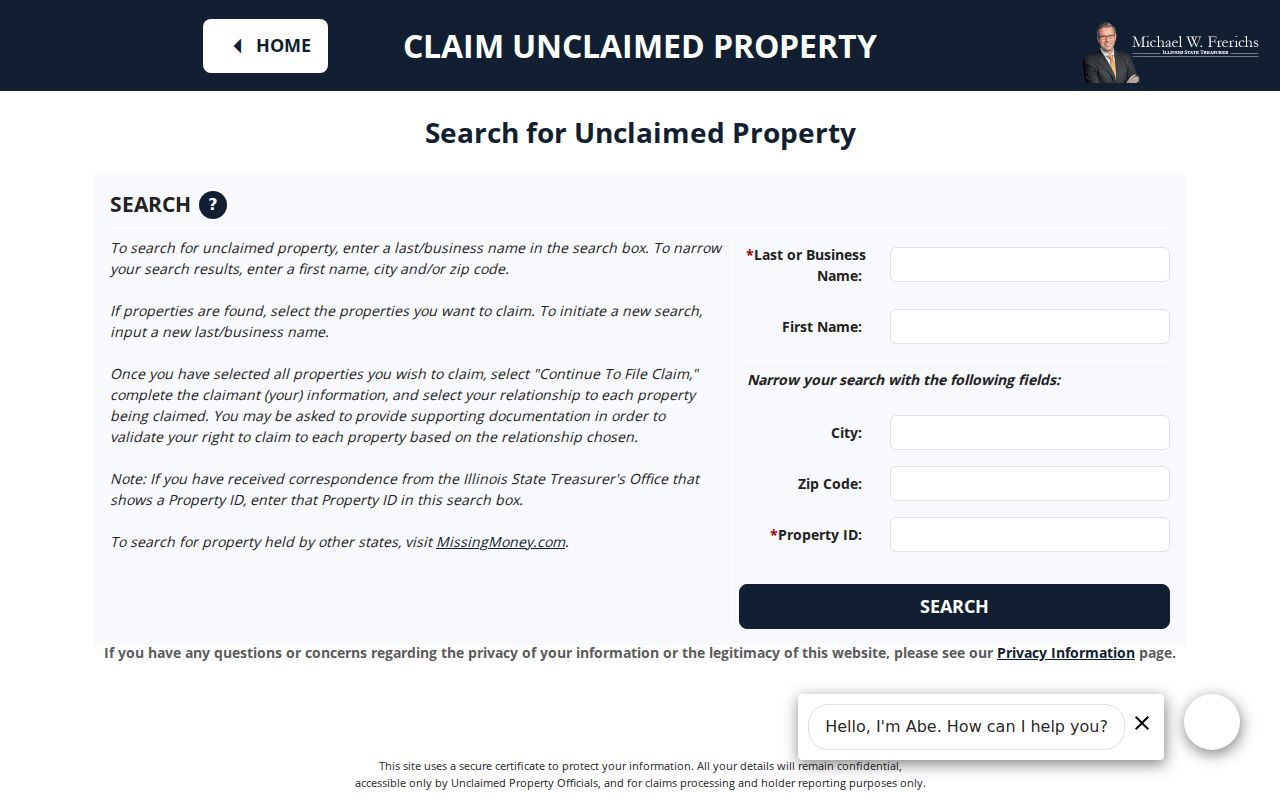
An I-CASH match still requires claim documents and proof of the claimant's relationship to the property.
Finding Cook County Heirs Carefully
Probate is the right starting point for an estate or heir question. Search the public Cook County court index by the decedent's name, then use the Probate or Wills file through the Clerk or Court Archives. A deed, notice of death, obituary, or I-CASH entry can point toward a relative, but the probate papers are the legal source for the estate. Archive requests should include the name, approximate year, division, known case number, and the type of copy needed.
Cook Court Archives publishes Probate and Wills coverage from 1871 through 1975, with later material in the active division route. The archive also holds naturalization files and other name-rich divisions. Its naturalization holdings include more than 500,000 petitions and more than 400,000 declarations from 1906 through 1929. For some immigrant families, a declaration may be the only surviving public record that anchors the resident to Cook County.
Why Cook County Lookups Fail
No result can have a simple cause. The spelling may differ, the record may predate the online index, or the event may belong to another county. A court filing can lag or sit in a restricted case group. Voter and Address Confidentiality Program protections can hide a residence. A property can be held by a trust or corporation. Non-owner occupants generally do not appear in the parcel and recording chain.
Use the fallback tied to the record. Court questions go to a public terminal, Clerk file, or Archives request. Vital questions move from the Cook genealogy portal to a Clerk form, IDPH, State Archives, IRAD, or a library index. A narrow executive-agency record request can use the Illinois Freedom of Information Act; courts follow their own public-record rules. A written Illinois FOIA request generally receives a response within five business days, subject to a permitted extension and exemptions.
Note: Ask for a named record, date range, case, PIN, or document number instead of requesting a broad file about a person.
Lawful Cook County Resident Lookup
Illinois opens records only within the law governing each source. Election files redact sensitive data. Vital and adoption records apply eligibility rules. Courts withhold sealed, juvenile, expunged, and confidential material. The Illinois Address Confidentiality Program gives eligible survivors a substitute address and mail forwarding, but it cannot erase property records that were already public. A resident may need to contact each custodian about a correction or statutory protection.
Correct a wrong fact at its source. That may mean the Assessor for a property-location issue, the Clerk for a recording or vital record, the election authority for registration, IDFPR for a credential, or the court clerk for a case file. A compiled commercial report cannot alter the official record and may contain stale or merged identities.
Lawful use. Use a Cook County resident lookup for legitimate personal research. Never use public information to stalk, harass, threaten, deceive, or expose a protected person.